
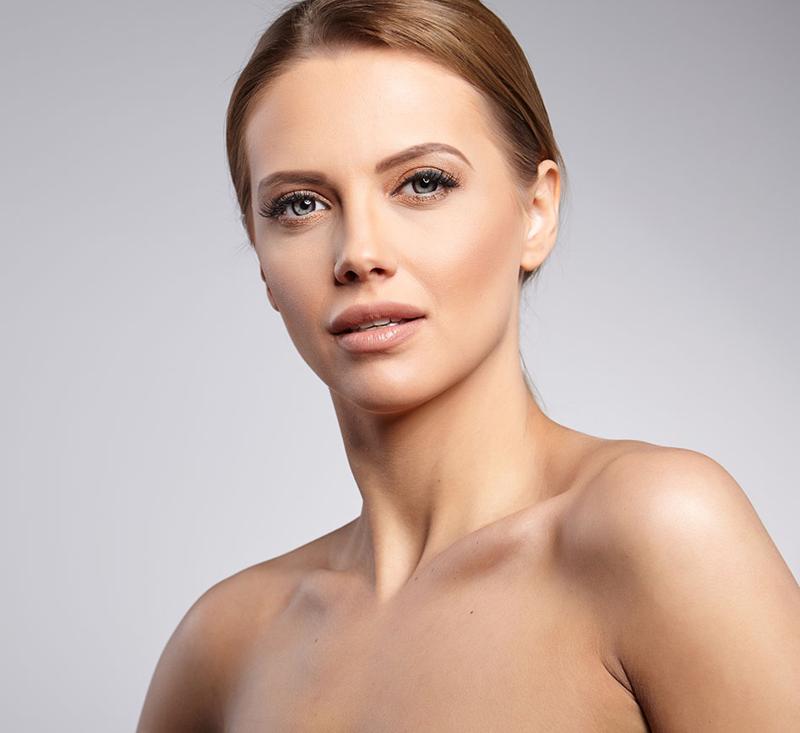
Traditional facelift techniques focused on lifting and pulling the skin, resulting in over-done, “wind-blown” appearances. Distorted hairlines, “pixie” earlobes, and noticeably disfiguring scars due to excess skin tension were frequently seen.
Dissecting deeper under the investing layer of the facial muscles (SMAS or Superficial MusculoAponeurotic System), allowed more lifting with less skin tension, yet did little to improve the sagging midface. Attention then shifted beyond lifting to adding volume with fillers or fat grafting to the central and midface. This too sometimes led to unnatural appearances, especially over-filled faces.
The deep plane facelift extends the deep dissection under the SMAS further forward in the face, releasing the tissue attachments to the facial bones, thereby allowing the midface to be lifted, restoring facial fullness without over-reliance on fat or fillers to fill the midface.
Contents
What is my background in facial plastic surgery?
I am honored to have learned how to operate before I even started medical school, trained by Dr. Denton A Cooley, the World’s Greatest Heart Surgeon. I have always been fascinated by anatomy, making the perfect score on the National Board Exam in Anatomy and later working as a teaching assistant in anatomy while in medical school at Baylor College of Medicine.
Realizing the intricacies of human facial anatomy, it was readily apparent that to become the best plastic surgeon, I had to first become an expert facial plastic surgeon before furthering my training in plastic surgery. I am truly honored to be among a select group of surgeons (less than 2% of all plastic surgeons in America) to be board certified by both the American Board of Plastic Surgery and the American Board of Otolaryngology – Head & Neck Surgery (ENT).
What is my preferred approach to facial rejuvenation?
My focus on facial plastic surgery combined with more than three decades of continual innovation led to my signature approach of Elegant Precision ™ Facial Rejuvenation.
“Elegant” as in ‘natural” and “artistic.”
“Precision” both in design and execution (technique).
The Elegant Precision™ Facelift is the optimal combination of specialized techniques customized for each individual patient’s unique anatomy. Most often this involves an upper facelift/brow lift combined with upper and lower eyelid lifts (blepharoplasties), followed by a lower facelift/ neck lift. Some patients request further enhancement with a lip lift, lip augmentation, fat grafting, or earlobe rejuvenation.
During my initial consultation, I believe it is very important to take time to listen carefully to what each patient desires, then teach them which combination of procedures will allow a natural, refreshed appearance without the tell-tell signs of facelift surgery. Patients then better understand which procedures might be best for them.
A browlift is the most misunderstood and underappreciated procedure. My Elegant Precision™ Brow Liff should be referred to as an Upper Facelift. Opening the eyes, refreshing the forehead, and lifting the upper face — as well as the brows have a powerful rejuvenating effect, alone or combined with an upper or lower eyelid lift.
Likewise, the Elegant Precision™ Lower Blepharoplasty/Eyelid Lift, can be transformational. My approach to lower eyelid rejuvenation doesn’t stop at the eyelid. Instead, I prefer to release the depressed tissues at the lid margin, lift the cheek tissues, and use the lower eyelid fat to blend the lid-cheek depression to correct lower eyelid ‘bags.’
The Elegant Precision™ Facelift combines a High SMAS, Deep Plane facelift with recontouring of the neck (neck lift) for a refreshed, natural appearance. Facial nerve monitoring is utilized for added safety during the deep plane dissection near the branches of the facial nerve. The face should be lifted up (not back), the neck and jawline sculpted, and the skin simply re-draped (without tension).
Meticulous attention to detail is paramount not only during dissection, lifting, and recontouring, but especially when closing the incisions for imperceptible scars. I believe it is imperative to take the time necessary to achieve the safest and most natural results. One of the best ways to judge the expertise of a facelift surgeon is to carefully study their facelift scars.
When is the right time to begin facial rejuvenation?
Patients often first notice looking tired or angry, due to upper facial aging. Most younger patients begin with rejuvenation around their eyes, with a brow lift and/or eyelid lifts.
Older patients are usually hyper-focused on their aging face and neck yet seldom appreciate how much their upper face has also aged. Since a facelift and neck lift only treat the face and neck (but not the upper third of the face or eyes), these patients ideally benefit from both upper and lower facelifting.
What is the recovery after facial rejuvenation?
Recovery varies based on the patient and selected procedures. Swelling and bruising are expected after lower eyelid surgery, yet patients are surprised that over 95% of our facelift patients have no bruising, no need for narcotics, and can attend social events in 1-2 weeks.
At USA Plastic Surgery, our Optimized, Rapid Recovery™ Protocol enables faster, better healing and improved results using a special combination of diet, supplements, and medicines, as well as postop Hyperbaric Oxygen and Red Light therapy when indicated.