




No Bruise™ “Better” Botox
Chapter 1: Botox & Filler Overview
0:00 (soft music) – So, let’s talk about Botox.
0:07 Botox is magic for plastic surgeons. I like to think of it almost like Photoshop for the face.
0:15 It can do remarkable things.
0:17 The FDA approved Botox in 2002 for treatment of wrinkles for cosmetic surgery for the area between the eyebrows, that’s called the glabella.
0:28 And they talk about the elevens.
0:30 In other words, if you tighten and scrunch here, you can see the little lines. Now, I love Botox.
0:35 Mine’s unfortunately worn off, but I wanted to be able to show you what the lines could be and then the Botox will help relax those later.
0:45 So, what exactly is Botox?
0:47 Botox is a toxin, it’s a neurotoxin. And it’s designed to decrease nerve impulses.
0:57 How is it made?
0:58 It’s made by bacteria, and there’s different options, there’s now Dysport and some others that are coming along with time.
1:05 So, it’s kind of Coke versus Pepsi, but the idea is that it’s a neurotoxin, made by bacteria,
1:12 that comes as a powder, you turn it into a liquid so that you can inject it, and, since it blocks the nerve impulses,
1:22 it can block the impulses to the muscle, and by doing that, relaxes the muscle, and by doing that, relaxes the wrinkles.
1:30 It can also decrease the nerve input to the sweat gland, and that can lead to less sweating.
1:39 And so, a lot of patients are unaware of the fact that Botox can work wonders for patients who have a lot of sweating, most commonly in the area under the arms.
1:49 And that’s an area that’s wonderfully treated with Botox.
1:53 And it tends to last quite a bit longer because you’re not trying to relax a muscle, it doesn’t take as much Botox to have a prolonged effect.
2:01 So, areas under the arm that are treated, the duration of effect can be a year or a year and a half in some cases,
2:09 versus Botox in the face, how long does it last? Well, the answer, of course, is it depends upon the muscles. For most people it’s about three months.
2:17 Sometimes it’s longer, maybe four or even five.
2:21 The concept is, if you inject the Botox into the muscle, it relaxes the muscle, and therefore the wrinkle relaxes.
2:31 Because the wrinkles occur because of the motion of the muscle. In other words, if you look at my forehead, as I raise the frontalis muscle,
2:38 that is the muscle that goes up and down, you see the creases here.
2:42 As I try and scrunch, you begin to see the lines here, because the corrugator supercilii move in this direction.
2:49 Around the eye, it’s a circular muscle, and as you tighten the eyes, you can see the little lines there, and we call those the crow’s feet.
2:56 So, where do we use it for wrinkles? Most commonly we treat three areas.
3:03 We treat the glabella, the area between the brows, we treat the forehead, and the corner of the eyes or the crow’s feet.
3:10 Sometimes patients will have little lip lines, and those also respond quite nicely to a little touch of Botox.
3:18 So, that’s a nice thing that many people aren’t aware of, but particularly patients, maybe smokers, that have a lot of lines, or some people with sun exposure,
3:26 a little touch of Botox in the upper lip, and sometimes the lower lip, can make a nice change as well.
3:31 Now that we’ve talked about what Botox is, where it comes from, how it’s made, how it’s used, let’s talk about who are the best candidates.
3:40 And the answer is pretty much anybody with wrinkles, provided they’re healthy, they’re not pregnant, and they don’t have an underlying neuromuscular-type condition.
3:49 If you have myasthenia gravis, or Eaton-Lambert syndrome, or Lou Gehrig’s disease, or one of those neuromuscular things, very rare, obviously, that would not be the best candidate for Botox.
4:00 But what age is the best age?
4:04 Well, when you begin to see wrinkles, it’s a good idea to consider Botox.
4:09 One fact that a lot of people are unaware of is that, once you begin to develop a crease in the skin,
4:17 then by doing Botox you can relax the muscles and hopefully prevent that crease from getting deeper, but that crease is already there.
4:24 So, some patients begin to go perhaps a little earlier, because if they can relax the muscle, then they can prevent the crease in the skin.
4:35 So, that’s one of the benefits of starting on Botox at an earlier age.
4:39 One of the other considerations with Botox is, sometimes, by repeated use, the muscles will begin to relax a bit on their own.
4:46 And so, perhaps, less Botox is needed over time, or, perhaps, less frequently.
4:51 Most patients, when they come, find that it last about three months and maybe four months, and so, they come in three or four times a year.
5:00 And, as I said, it’s one of my favorite things to do, because it really creates a wonderful change very quickly, and the patients tend to be thrilled with it.
5:10 So, that’s the magic of Botox.
Chapter 2: Better Botox
5:12 (soft music) Now let’s talk about Better Botox.
5:21 And what do I mean by Better Botox?
5:23 Well, since I have Botox done myself, again, mine’s worn off at this point, unfortunately,
5:29 but there’s the normal way that it’s done, and the way I do it differently. And I want to share that with you.
5:38 Botox comes in a box, and this is Botox Cosmetic.
5:44 Now, Botox Therapeutic is the same stuff, they just put it in into a different box.
5:49 It comes as a powder and you can’t inject a powder, so you have to turn it into a liquid. And in doctor term for that is reconstitute it.
5:58 So, you’ve gotta put some sort of liquid in to mix it up and you can mix it up to different concentrations.
6:06 Now, I think just about everybody pays the same amount for Botox. They’ve really cornered the market.
6:11 And yet, if you dilute it a lot, then it goes a lot further.
6:16 Of course, it doesn’t last as long, but if you can use less of it per person, then chances are you could probably charge less for it as well.
6:25 So, the concept is that you want to think about what it is that you’re doing, and what it is that’s gonna give you the best possible result.
6:34 And my approach is different.
6:37 Better Botox means let’s stop and look at each aspect of the procedure, and figure out a better way of doing it.
6:45 Traditionally, the liquid that is used to mix the Botox stings, and when it’s injected, it hurts.
6:54 And so, that’s concerning to me, because I’ve had it done and I’m like, hey, this stuff hurts. I mean, there’s gotta be a better way.
7:00 And so, the fluid that I use to mix it with doesn’t sting when it’s injected. And that’s a big difference.
7:07 It’s essentially virtually painless Botox.
7:10 Now, the other concern is I use a highly concentrated amount of Botox, and, therefore, I can get the same effect with less volume
7:19 of fluid injected, because it’s more concentrated. The secret is you gotta know where to put it.
7:24 And so, you wanna customize it exactly to the muscles that you wanna treat. And I develop a customized plan for each individual person.
7:33 Now, you have heard, perhaps, or seen patients with a real Botox-type frozen look. Well, you don’t want that.
7:40 To me, the goal is not a frozen look, it’s not designed to abolish your emotions, but rather to get rid of the wrinkles
7:49 to soften the facial appearance, but yet preserve the function and preserve the emotions.
7:55 And that’s why you have to really understand where are the muscles, how much needs to be treated, and which muscles need to be treated to what amount?
8:05 And so, I develop a very customized plan for each individual patient.
8:08 And when I do Botox for the first time, I do all my markings, we do the injections, and then I see the patients back in a couple of weeks.
8:16 And then I wanna look and see do we need to tweak that plan?
8:19 So, it’s almost a customized cookbook, if you will, a recipe for each individual person, and then we can modify that, if we need to, we can add a little more here or there, and then follow them over time.
8:30 And once we’ve determined what works best for them, and typically we’re right on with the first plan, but we may want to adjust it a bit,
8:37 then we know in the future, patients typically are very good about coming back every three, four months in order to have their repeat Botox.
8:46 Now, occasionally I’ll get the emergency Botox, and that’s often a male physician who will call me on a Monday, oh my God, Steve, you gotta help me out here because my Botox is just gone.
8:55 And they, I think, woke up on Sunday and looked in the mirror and said, oh my gosh, what happened? So, that’s the Monday-night emergency Botox, if you will.
9:03 But the idea is that it tends to onset rather quickly.
9:09 Most commonly you’ll begin to see results in a couple of days, particularly with a thinner muscles.
9:14 The ones the corner of the eyes when you smile that tends to soften pretty quickly.
9:19 In most cases they’ll see a change in about two days, and then it’ll max out in about two weeks, and typically last three or four months,
9:27 maybe a little longer, it depends on each individual.
9:30 So, Better Botox is not just what I mix it with, and it’s not just using a higher concentration, and it’s not just specifically targeting the exact muscles.
9:43 It’s also not just what you inject, it’s how you go about injecting it.
9:48 If we think about the pain, the pain relates to how big the needle is, how quickly the needle goes in,
9:55 how much fluid is injected, and how quickly it’s injected as well as what fluid gets injected.
10:01 So, let’s find a fluid that doesn’t sting. Yay. Next, let’s find a super tiny needle.
10:08 Okay, special-order needles.
10:11 And let’s change ’em frequently so that they stay really sharp, okay?
10:15 Next, let’s go through the skin very quickly because that’s the pain, but inject very slowly because the slower you inject,
10:24 the less you distend the tissues, and the less volume you put in, the less you distend the tissues and the less your pain.
10:31 Finally, very frequently we’ll ice the tissues just before and just after.
10:36 And what that does is it tightens the skin a bit, squeezes the blood vessels, then also you get a little numbing effect.
10:42 So, typically, we don’t have any bleeding, typically, we don’t have any bruising, and it can be a really nice cha-
10:50 One doctor’s wife came to me and she said, Dr. White, I just wanna try one more time with the Botox.
10:59 Now, she’d had Botox twice before, done in a plastic surgeon’s office, with the nurse doing the injection.
11:06 And the first time she said it just didn’t work.
11:09 So she came back, and they did it again and she said, it still doesn’t work.
11:12 And they just told her she’s just not a good candidate for it.
11:15 And I said, well, that’s kind of silly because, I mean, you can paralyze a horse with Botox, of course, it’d cost about $65,000 worth of Botox to paralyze a horse,
11:23 but the point is not that it doesn’t tend to work, it’s just that you have to use the appropriate concentration,
11:31 and the appropriate amount, targeted to each individual muscle.
11:36 So, she decided she wanted me to do it, and when she showed up for her appointment, she said, “I’m all ready, I brought my baseball cap and everything.” And I said, “baseball cap?”
11:44 She said, “yeah, for the swelling.” And I said, “what swelling?” She said, “well, I mean, it gets all swollen afterwards, so that’s why I got my cap.” I said, “what are you talking about?”
11:51 She said, “well, it just swells up.” I said, “no, it doesn’t.” And she said, “really?” And so, she was so surprised.
11:58 Patients very frequently will have dinner appointments that evening and evening events, and, typically, we have very little swelling
12:06 and very little bruising, again, because we specifically target the muscles and use a smaller volume, but a higher concentration to target each individual muscle.
12:15 So, Better Botox is a different liquid, a higher concentration, a specific targeted muscle,
12:22 a smaller needle and icing before and after, frequently change the needles,
12:29 go through the skin very quickly, inject very slowly, and it’s essentially virtually painless Botox.
12:36 I actually had a patient once, who was a physician, actually she was an attorney, and she was on blood thinners for a blood clot that she’d had.
12:45 And she was interested in the Botox and fillers.
12:49 And surprisingly, with this approach, after not only the Botox but also her fillers, she had no bleeding and not even any bruising afterwards.
13:02 So, again, if you apply precision surgery to something as straightforward as Botox, then I think Better Botox is the way to go.
13:12 And it allows me to essentially erase the lines, if you will, in a Photoshop-type effect for the face.
13:20 And this is one of the reasons why the Botox patients tend to be so happy and are so eager to come back.
13:26 And some of ’em, in fact, are eager to schedule their follow-up appointments well in advance. They say, look, I don’t want it to wear off. I mean, I wanna come back in two months. I don’t wanna wait for three months.
13:34 And I said, well, no, most people let’s just figure out what works best for you and put you on a regular schedule. And it does create a wonderful change.
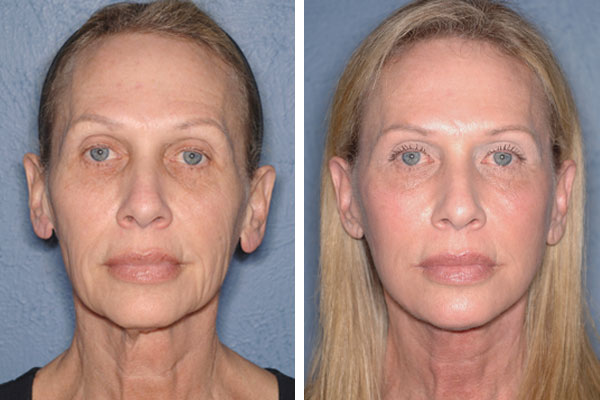
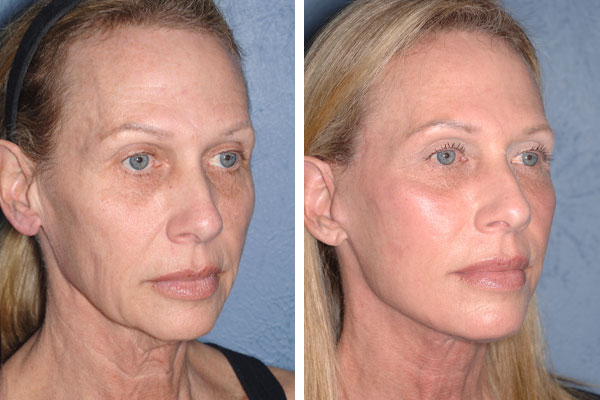
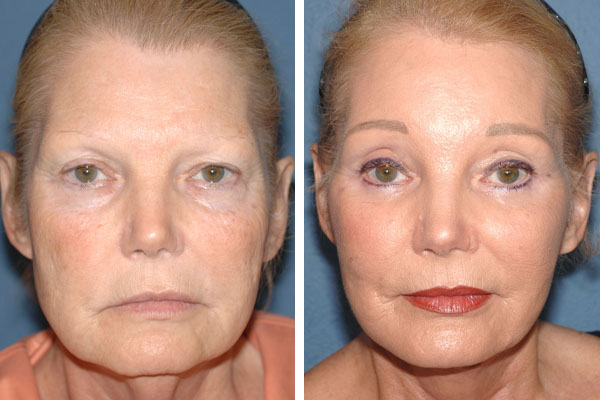
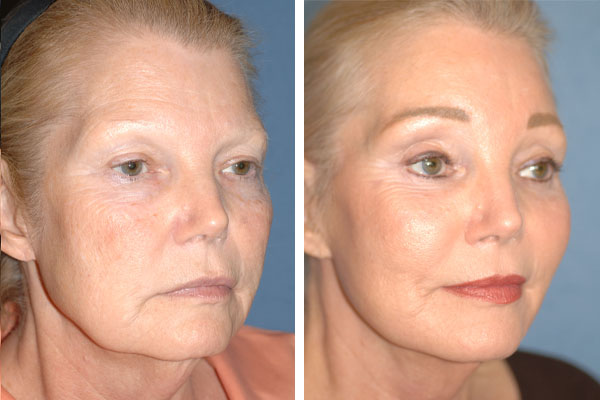
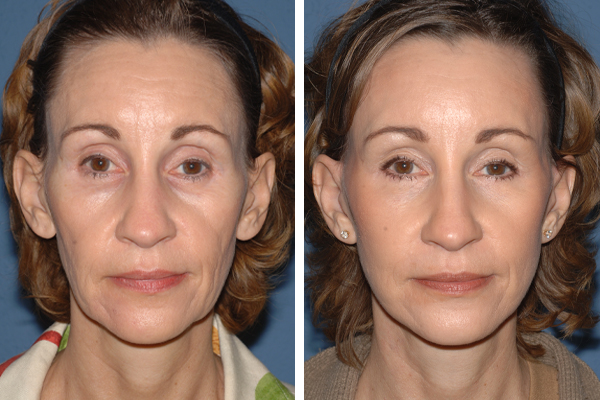
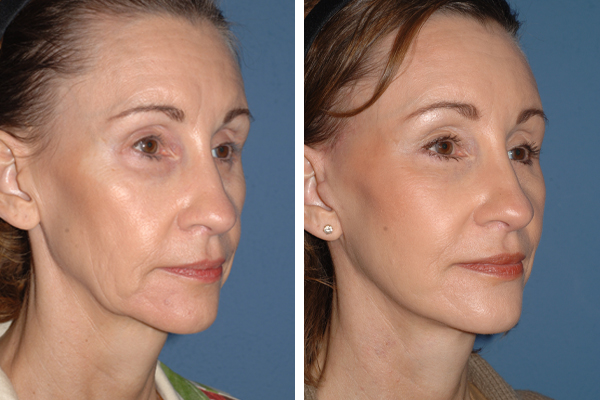
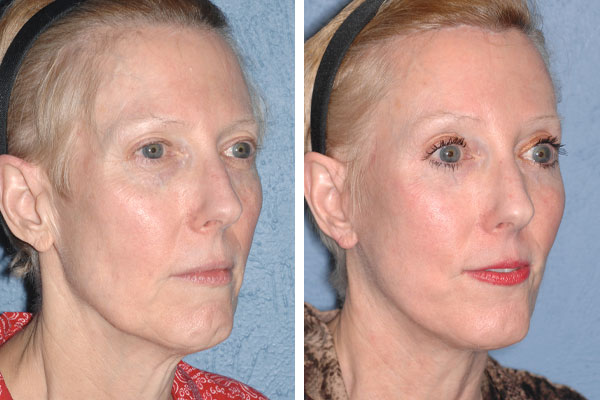
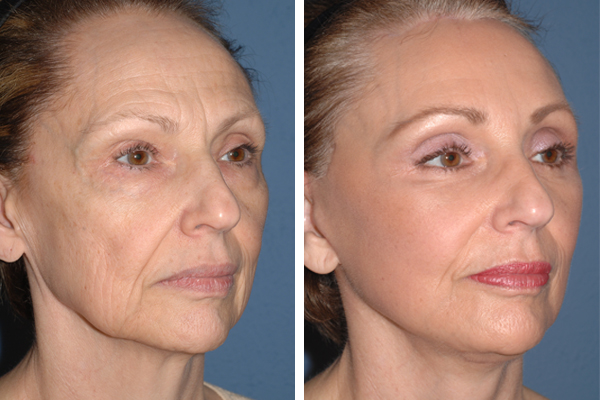
13:42 And we’ll look at some of the results.
13:44 I wanna clarify something, when I talk about change the needles frequently, what I mean is obviously we don’t use the same needle for multiple patients.
13:52 The concept is I draw it up in very, very small syringes, 1cc Tuberculin syringes,
13:58 and I only inject a little bit with every needle, and then we get rid of the needle and get a new needle.
14:04 So, very often I’ll go through a whole handful of needles just for one patient for Botox because we change it frequently
14:12 so that those really tiny little needle stays sharp, and so that it’s virtually painless Botox.
14:19 One of the things that makes Botox such a great procedure is it’s very uncommon for there to be an untoward event with Botox.
14:26 You relax the muscles, but it’s a temporary effect, so it tends to wear off.
14:31 And, yes, it’s possible to have some bruising, or possibly a little bleeding, again, that’s uncommon, but possible,
14:39 I think that’s probably the most common thing that you may see, but again, you could wear some makeup in a day or two and that tends to camouflage it.
14:47 The other thing that would be more significant would be if some of the Botox were to go to an area
14:54 that you didn’t want it to, in the upper eyelid or down around the muscles to the mouth, and you could have some asymmetry of the smile, or a droopiness of the upper eyelid.
15:04 And, in fact, a number of times that’s when patients will seek me out when they’ve gone to their family practice doctor, or their dermatologist,
15:12 or their OB GYN doctor and had Botox, and then they discovered that, wow, wait a minute, how come my eyelid is drooping afterwards?
15:22 And that’s when they do a little due diligence, do some research, and they say, I’d really like to go see the plastic surgeon, and particularly the one who’s board certified
15:30 both in ENT and plastic surgery, that really understands the muscles, and let’s try and take the precautions to avoid that from happening again.
15:38 So, we wanna precisely target the muscles to minimize the chance of droopiness of the eyelid.
15:43 Should that occur, there’s some eyedrops that can be beneficial, and that would tend to wear off with time.
15:48 So, I think those are kind of the big concerns that we have for Botox.
15:52 Very rare, but possible, and that’s why I put so much attention into using a concentrated amount, and being very careful about where it’s being placed.